

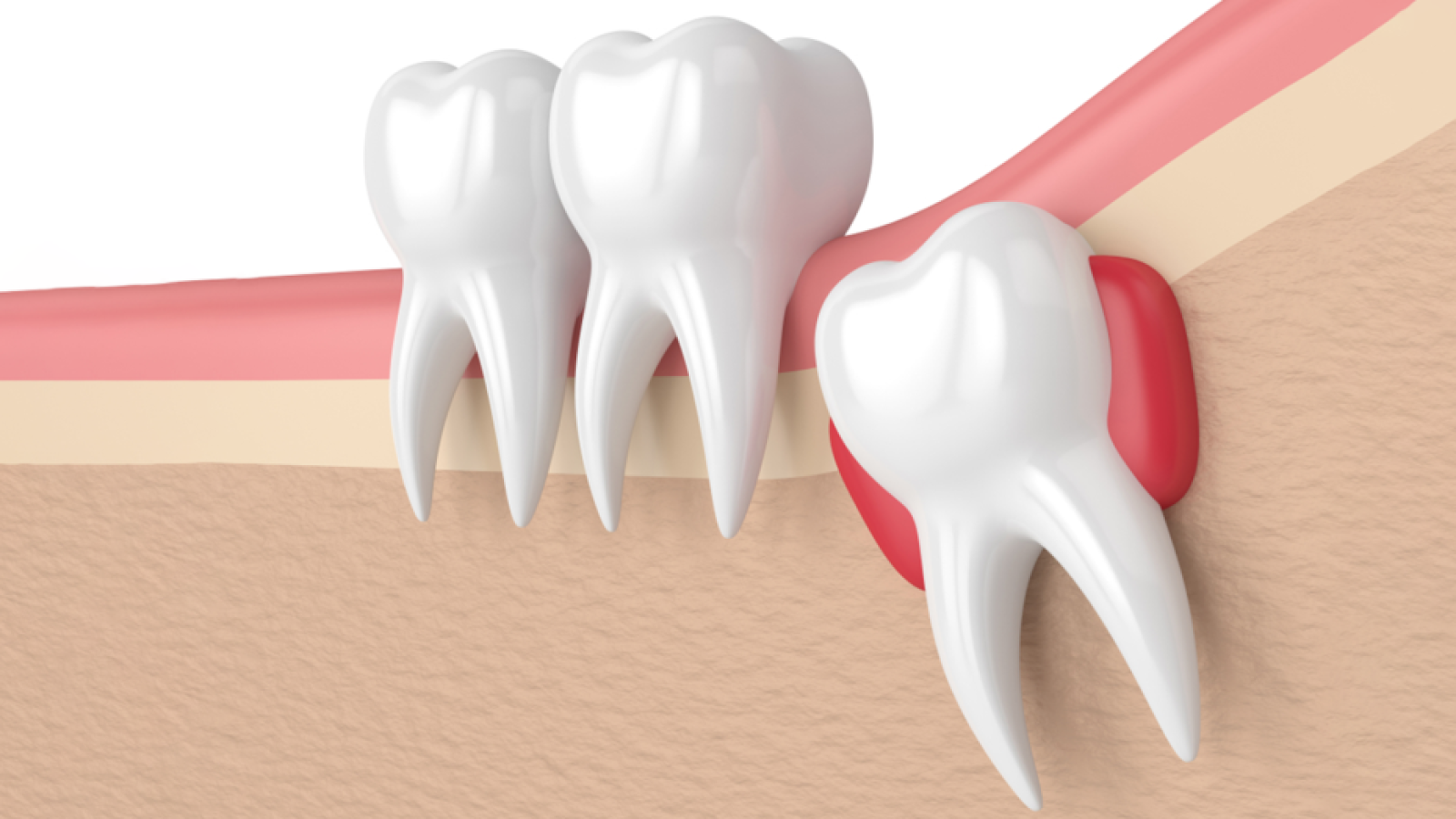
Our first tooth (milk) comes out approximately between 4 and 7 months, while our last one (wisdom) comes out between 17 and 25 years. Unlike the milk tooth, the wisdom tooth comes in with a very painful entrance.
Wisdom teeth are the last three teeth out of the 32. They come at the very end of the mouth when your jaw is fully developed. This makes the whole space congested and difficult to clean.
The congestion can lead to tilting and impacting. Impact can cause pain, swelling, infection or damage. All these issues can be solved by one solution – teeth removal.
Continue reading to know the importance of removal.
Common Signs You May Need Wisdom Teeth Removal
Some daily-life moments are actually common signs that signal teeth removal.
First is a pain or discomfort in the back of the mouth. If you experience constant pain in the back-end, it is because of an impacted or partially erupted wisdom tooth.
Second are swollen or tender gums. These conditions signal inflammation, redness, or bleeding around the wisdom tooth.
Third is having difficulty chewing or opening the mouth. An impacted wisdom tooth can cause pain or make the jaw stiff, making it hard to open your mouth.
Fourth is having unpleasant taste and halitosis, a.k.a bad breath. Food and bacteria tend to get trapped around a partially erupted wisdom tooth, making it difficult to clean. So, a bad breath or a foul taste occurs.
Problems Caused by Impacted Wisdom Teeth
Four common issues occur from impacted wisdom teeth. They are:
1. Infections & Swelling : The gum tissue often partially covers the impacted wisdom teeth. This allows the bacteria to accumulate, leading to constant infections, pain, swelling, and difficulty in opening the mouth.
2.Pressure on Nearby Teeth : After coming out, the wisdom teeth push the molars next to them, creating pressure on the nearby teeth.
3.Crowding or Alignment Issues : When a new impacted wisdom tooth erupts, it can cause crowding or shifting of other teeth over time. Our best orthodontist in Kochi offers advanced orthodontic treatments that can solve these misalignment issues.Since this is not a proven fact yet, the result may not come out the way you expect it to be.
4.Risk of Cysts or Decay: Chances of cysts or decay around the bone and teeth are high. Their location at the end makes it difficult to clean, which leads to tooth decay and gum disease.
How Dentists Determine the Need for Wisdom Teeth Extraction
They determine it through three procedures.
First comes the clinical exam and X-rays. The results from these procedures show whether the patient has pain, swelling, or infection. From X-rays, dentists can learn about the impacted teeth, root position, and proximity to nerves or sinuses.
Second comes the growth and alignment evaluation. Here, the dentist evaluates the space around the wisdom teeth for their eruption and growth. If the results show poor alignment or partial eruption, then the dentist will suggest removal.
Third comes the assessment of potential complications. Some complications include recurring infections, decay in adjacent teeth, cyst formation, and crowding. Dentists suggest extraction as a solution.
Pain. Persistent heavy, splitting, and unbearable pain is the primary warning sign of extraction. The following are discomfort, swollen, tender gums, stiffness, foul taste, and bad breath.
When the symptoms hit you at first, you tend to follow others’ experiences and solutions. Instead, consult a professional dentist who examines and determines the right solution and treatment.
At Dr Bobby’s Orthodontics & Dental Speciality Care, our team of expert dentists with their expertise and advanced technology will give you the best treatment. Call us at +91 8078961273, or visit our clinic at Kadavanthra.
The procedure is painless due to local anesthesia or sedation. Mild discomfort or swelling after surgery is temporary and manageable.
Initial healing takes a few days, while complete recovery occurs within 1–2 weeks.
Soft foods like yogurt, soups, mashed potatoes, and smoothies are recommended initially. Avoid hard, spicy, or hot foods.
Yes, impacted or infected wisdom teeth can cause jaw tension and referred pain, leading to headaches.
A dental examination and X-ray can confirm their presence. Symptoms may include pain, swelling, or pressure at the back of the jaw.