

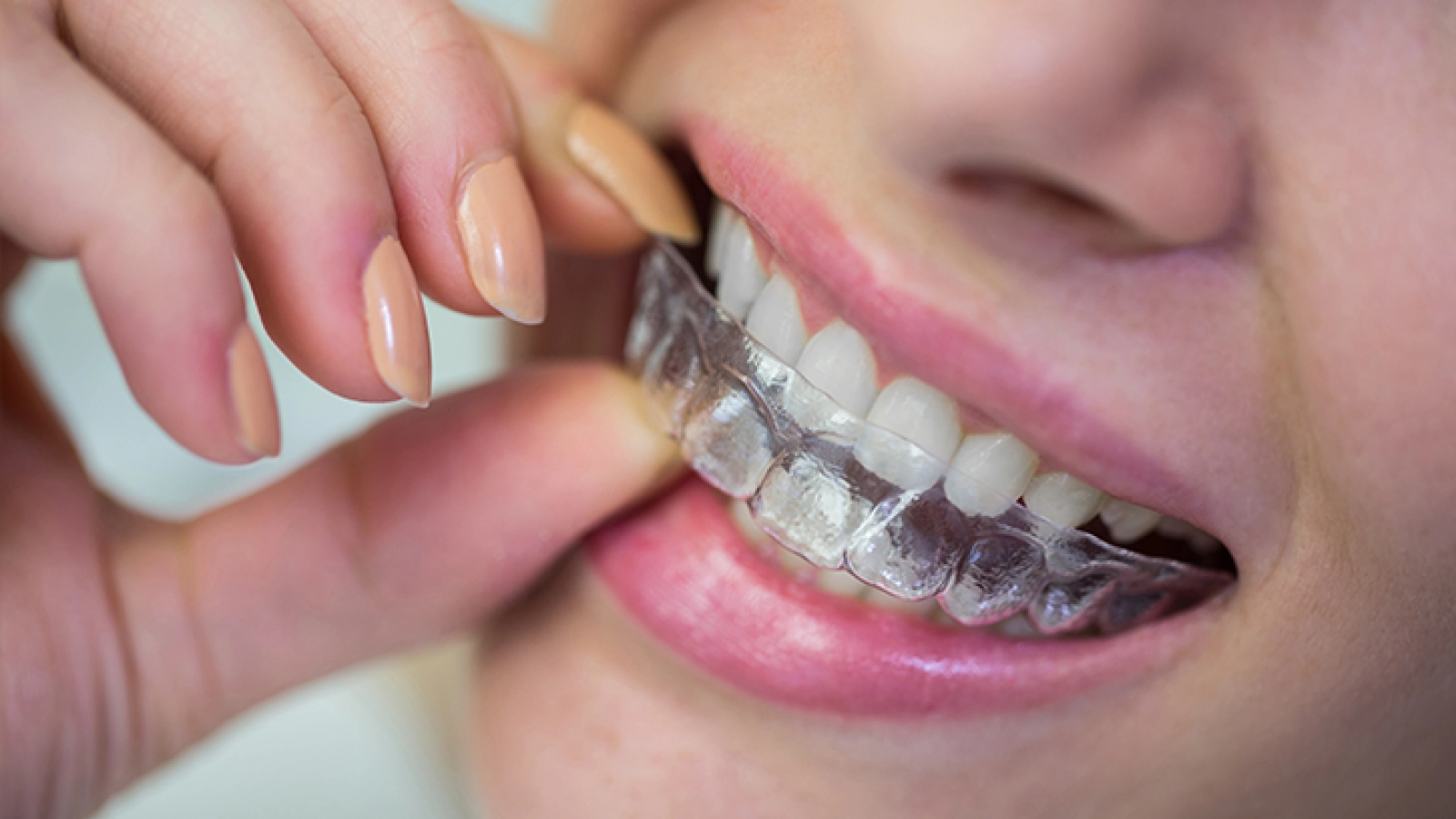
We know that clear aligners are smooth, invisible trays that fix dental problems by acting like a second layer of teeth. There is something you don’t know about them. Clear aligners have small, tooth-coloured bumps on specific teeth called clear aligner attachments. They are tiny bumps of dental composite resin. They are attached/bonded to the teeth either at the beginning or during the treatment. Once the treatment is over, the dentist gently polishes them off.
Clear aligner attachments provide extra grip, anchor the aligner, and support it to give controlled pressure to fix the issue. You might not often see them on aligners because they are discreet and temporary.
What Are Clear Aligner Attachments?
They are small, tooth-coloured dots or shapes temporarily bonded to the teeth during treatment. Clear aligner bumps on teeth act as tiny handles or grips, giving the aligners something to hold onto. They also support the aligner to push or pull the tooth.
The attachments come in two types: conventional (passive) and optimised (active). Conventional attachments are standard geometric shapes, such as rectangles or bevels. They give basic anchorage and grip. Optimised attachments are customised shapes designed by computer software for a specific tooth and movement.
Their major advantage is that they are not permanent. At the end of treatment, they are polished off with a special polishing tool. It is quick, painless, and keeps your natural tooth enamel safe and smooth. After removal, dentists will take impressions or scans to make post-treatment retainers.
Why Do Clear Aligners Need Attachments?
For four functions: preventing slipping on smooth or rounded teeth, pulling a tooth down or pushing it up, turning a crooked or misaligned tooth, and moving the entire tooth, including the root under the gumline. They help with specific tooth movements such as rotating teeth, intrusion and extrusion, closing spaces, improving the position of crowded teeth, and controlling difficult movements.
Rotating Teeth
Teeth such as canines and premolars have smooth, curved surfaces that cause the aligners to slip. Clear aligner attachments help aligners apply a rotational force couple (torque). They do it with the help of a mechanical surface or edge.
Intrusion & Extrusion
Intrusion is pushing the tooth deep into the socket and jawbone. Extrusion is pulling a tooth outward from the jawbone and toward the biting surface to lengthen its visible crown. Attachments offer a natural vertical grip for the aligners. They clip onto attachments or push against them for an active pull or vertical tooth depression.
Closing Spaces
Closing gaps are also known as diastemas. They are solved by translating or tipping teeth sideways along the jawbone. Attachments support the aligner’s direct horizontal force and prevent the tray from flexing, sliding off, or tipping the crown undesirably while the root lags.
Improving the Position of Crowded Teeth
Crowded teeth can often overlap, twist, or sit out of alignment. They can be corrected with complex multi-directional shifts. Clear aligner attachments improve the grip and predictability for individual teeth. This helps the aligners slide past neighbouring teeth and line up efficiently in the dental arch.
Controlling Difficult Tooth Movements
Complex movements such as root angulation, torque control (changing root tilt), or moving teeth bodily instead of the crown require proper force systems. Attachments direct the point of force delivery, giving the orthodontist accurate mechanical control to guide stubborn or unmovable teeth according to the digital treatment plan.
Clear aligner attachments improve precision and control and make complex movements more predictable. They provide better grip, targeted force vectors, and better tracking. They make the movements predictable through rotations, vertical shifts, and root control.
What Do Clear Aligner Attachments Look Like?
They look like tiny, tooth-coloured bumps or dots. Shaded dental composite resin is used to blend in and remain barely noticeable. Their shape depends on the specific tooth movement required; it could be tiny squares, rectangles, circles, ovals, or triangles. Some are flat; others are angled or bevelled.
Clear aligner attachments can be covered by clear aligner trays. They can be covered by custom pockets, snug fit, and protection. Custom pockets are accurately made with small pockets that match the exact shape and position of your composite attachments. The snug fit feature secures both your teeth and tiny tooth-coloured bumps. The attachments’ covering plastic layer protects your cheeks and lips from rubbing directly against the textured edges of the composite material.
How Are Attachments Placed on Teeth?
Clear aligner attachments are placed in seven steps:
- Digital Planning – The 3D treatment plan determines the exact size, shape, and location of each attachment.
- Tooth Preparation – Preparation includes thorough cleaning, polishing, and drying for a strong bond.
- Etching – An acidic etching gel is applied to the tooth surface for about 30 seconds and then rinsed off. This creates a microscopic roughness so the material sticks securely.
- Bonding Agent – A liquid dental adhesive is painted onto the etched spot and lightly cured with a blue LED light.
- Filling the Template – In a specialised clear template tray, precise recesses or pockets are filled with tooth-coloured composite resin.
- Placement and Curing – The filled template is pressed gently over your teeth. A blue curing light is shone through the transparent tray to harden the composite resin in seconds.
- Finishing – The template tray is carefully peeled away, leaving the hardened attachments bonded to the teeth. The dentist then polishes away any excess bonding material and checks your bite.
The good news is that clear aligner bumps on teeth do not need drilling for installation. But keep in mind that you could feel pressure, tightness, or mild soreness at first. It could happen because of active tooth movement, new tray design, and tissue adaptation.
Do Clear Aligner Attachments Hurt?
They do not cause sharp pain, but you may feel mild tightness, pressure, or irritation. The pressure, tightness, or aching sensation happens because the attachments help the aligners apply more accurate force to move the teeth. The irritation comes from the rough surface of the bare attachments. They can feel scratchy against your cheeks or lips when you don’t use aligners while eating or cleaning. This changes within a few days. The removal doesn’t hurt; it will feel like a standard dental cleaning.
If you feel any sharp or unusual discomfort, visit your dentist as soon as possible.
How Should You Care for Teeth with Attachments?
Daily cleaning habits, food and drink precautions, avoiding trapped food, wearing aligners for the recommended amount of time, avoiding hard objects, and scheduling regular appointments are essential aftercare measures.
Cleaning habits include brushing after meals, using a soft toothbrush, and daily flossing. Food and drink precautions include avoiding staining liquids, rinsing with water, and skipping hard foods. Avoiding trapped food reduces the risk of cavities, tooth decay, and bad breath. Avoiding hard objects protects the composite attachments from breaking off and keeps your aligner plastic from cracking or warping. Regular appointments help your dentist evaluate how well the aligners and attachments grip your teeth and make timely adjustments to your treatment plan.
Are Attachments Necessary for Everyone?
No, it isn’t. Three cases determine the need: complex movements, grip and leverage, and bite correction. Some cases you should avoid are simple alignment and express cases. Simple alignment includes minor straightening or cosmetic adjustments. Express cases include mild or short-term treatment tiers. These cases are best solved by clear aligners without attachments.
Conclusion
Clear aligner attachments are small but important components of many orthodontic treatments. They help aligners grip the teeth securely and apply targeted pressure for specific tooth movements. Although they may be noticeable up close, clear aligner bumps on teeth are designed to be discreet and are used for as long as needed during treatment. Following your orthodontist’s instructions, wearing your aligners as recommended, and attending regular check-ups can help ensure effective and predictable results.
If you’re looking for the right dental clinic, here’s one. Dr Bobby’s Dental Clinic, the best dental clinic in Kadavanthra, with an experienced, expert orthodontic team, provides personalised cosmetic dental care through advanced technology and individual treatment plans. Call us at +91 8078961573 or visit our clinic in Kadavanthra.