

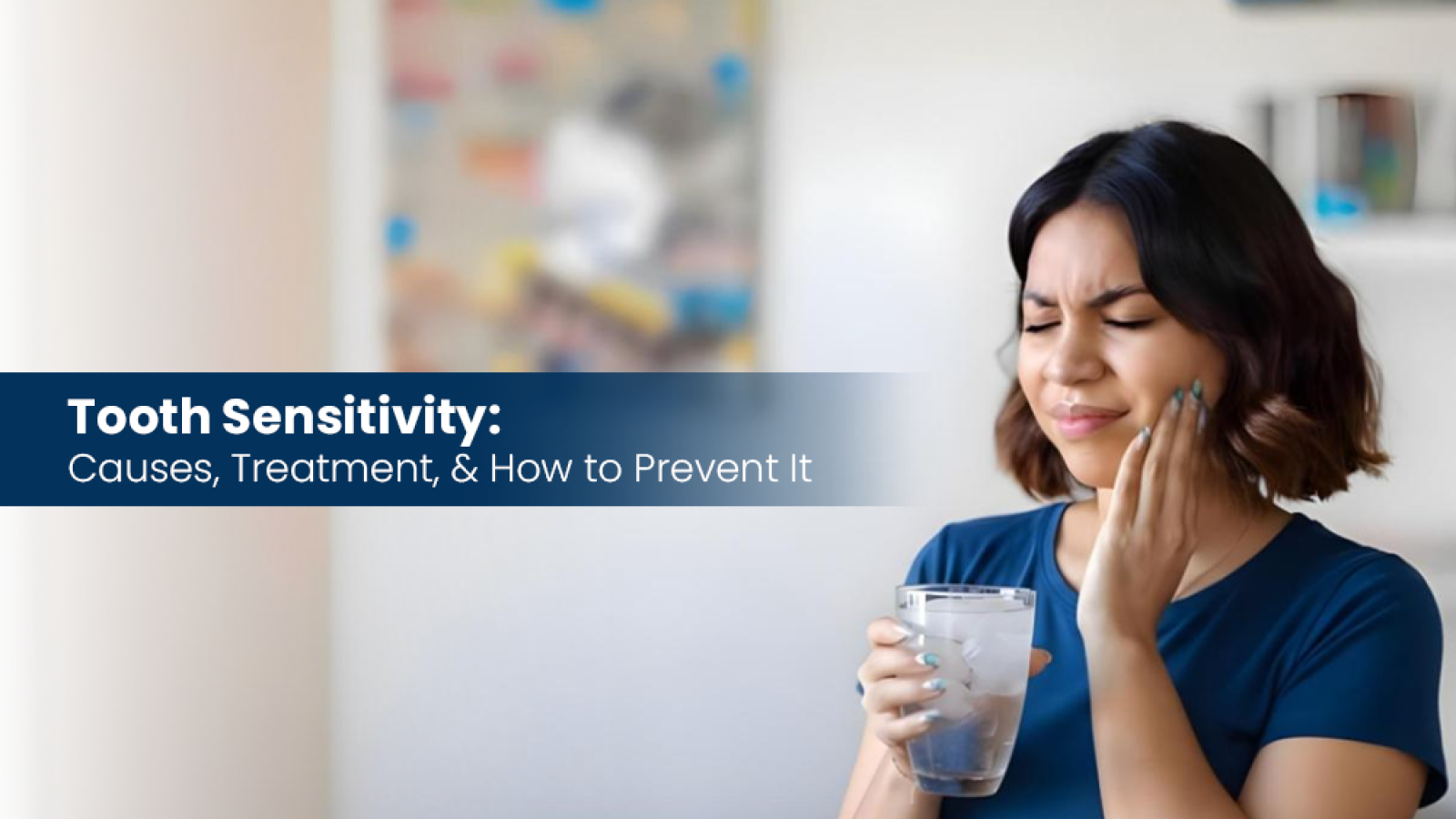
In toothpaste commercials, have you seen people in pain because they had an ice cream or hot tea/coffee? If you have, you must know it is not mere acting; those are real feelings undergone by those who suffer from tooth sensitivity. It is a dental condition where your teeth feel discomfort or pain when something hot, cold or sweet triggers them.
You might have heard a lot about it, and as painful as it sounds, it is treatable. With the right advanced dental treatment, procedures, diagnosis, and preventive care, you can be free from the pain.
Want to know more about tooth sensitivity, causes, and treatments? Keep scrolling.
What Is Tooth Sensitivity?
Tooth sensitivity is a dental issue that occurs when the dentin (tooth’s inner layer) is exposed due to enamel wear or gum recession. It creates sharp and short bursts of pain for a few seconds.
Sensitivity is of two types: long-term and short-term. Long-term indicates enamel erosion, gum recession, or cavities. This is a call for treatment. Short-term comes after teeth whitening, cleaning, or minor enamel wear. This sensitivity dies down quickly.
Common Causes of Tooth Sensitivity
There are six sensitive teeth causes that can create long-term tooth sensitivity.
1. Worn Tooth Enamel
Hard brushing and using abrasive toothpaste are the main reasons. If you believe brushing hard works best for your teeth, then you are wrong. It only creates damage for your teeth by exposing the sensitive inner layer (dentin). Using whitening or polishing toothpaste can also create enamel erosion over time.
2. Gum Recession
Gum recession happens due to gum inflammation and periodontitis. Due to these issues, the gums move back and no longer cover the roots. This makes the teeth highly sensitive to hot, cold, sweet, and acidic foods. Our expert periodontist will give you the perfect Periodontic therapy (gum therapy) to control infection, reduce recession, and protect exposed roots.
3. Tooth Decay or Cavities
When cavities break down the enamel, the external stimuli or the triggering food item reaches the sensitive dentin layer. This is how one feels the sharp and short pain.
4. Cracked or Chipped Teeth
Hairline or small cracks can reveal the inner tooth layers outside. This gives the layers exposure to temperature changes or pressure, which irritates the nerve.
5. Teeth Grinding
Grinding is technically known as bruxism. It is the unconscious clenching or grinding of teeth, especially at night. Continuous friction wears down the enamel, exposing dentin. This makes the inner layers more sensitive.
6. Recent Dental Procedures
If you have undergone any dental procedures like teeth whitening, professional cleaning, or fillings, then you will experience a temporary sensitivity.
What Triggers Tooth Sensitivity?
Hot, cold, sweet, acidic foods, cold air, and blushing or flossing are the reasons for sensitive teeth. All these irritate the exposed dentin and weaken the enamel. That is when one experiences sharp, intense pain.
When Should You See a Dentist?
- Constant pain for a few days – The increased duration could be due to enamel damage, gum recession, or early decay.
- Sensitivity turning into a sharp or throbbing pain – This could be due to an infection or a nerve involvement.
- Consistent pain from hot, cold, or sweet foods – While consuming them normally, if you feel constant sensitivity and discomfort, then the tooth sensitivity is developing.
- Isolated tooth sensitivity – Pain in a single tooth indicates a cavity, crack, or exposed root needing treatment.
Professional Dental Treatments for Tooth Sensitivity
Fluoride application, dental fillings for cavities, gum treatment for recession, root canal treatment, and night guards for grinding are the dental sensitivity treatments done by our expert team.
Fluoride application creates a protective barrier that protects the affected area from hot, cold, or sweet food items and drinks. Applying them strengthens tooth enamel and decreases nerve sensitivity.
Dental fillings seal the exposed inner layer of teeth. They protect the dentin from another bacterial attack.
Gum treatment, also known as periodontal treatments are done when gums pull away from the tooth, revealing the inner roots. The treatments regain the gum health and reduce the discomfort.
Root canal treatment is typically done for severe issues. If a deep infection or nerve damage is found, a root canal is done to remove the infected tissue.
Night Guards are given to reduce the constant teeth grinding. This protects the teeth and reduces pressure.
How to Prevent Tooth Sensitivity
Knowing what, how, and when to do the right techniques will save your tooth from tooth sensitivity.
- Use a soft-bristled toothbrush, and brush in a gentle circular motion.
- Use a desensitising toothpaste to block the pain trigger from the revealing dentin.
- Go for routine dental check-ups by professionals.
- Regularly use a night guard for teeth grinding, recommended by a dentist.
- Avoid frequent consumption of acidic foods/drinks. If you consume, rinse your mouth with water right after consumption.
Our daily routines can create tooth sensitivity. Just like every other health issue, early detection will help you treat the sensitivity. The earlier you find it, the lighter the treatment will be.
At Dr Bobby’s Dental Clinic, our expert doctors will give you the personalised dental sensitivity treatment for your sensitivity issue. To solve your dental issues with the best treatment, call us at +91 8078961273 or visit our clinic at Kadavanthra.
Yes, when the underlying cause is identified and treated properly. Desensitising treatments and restorative procedures can provide long-term relief.
Mild cases can be managed, but lost gum tissue usually doesn’t grow back naturally. Severe cases may require gum graft procedures.
Temporary sensitivity can occur after whitening. It usually subsides within a few days.
Root canal treatment is needed when tooth sensitivity is severe, consistent, and caused by nerve infection or deep decay.