

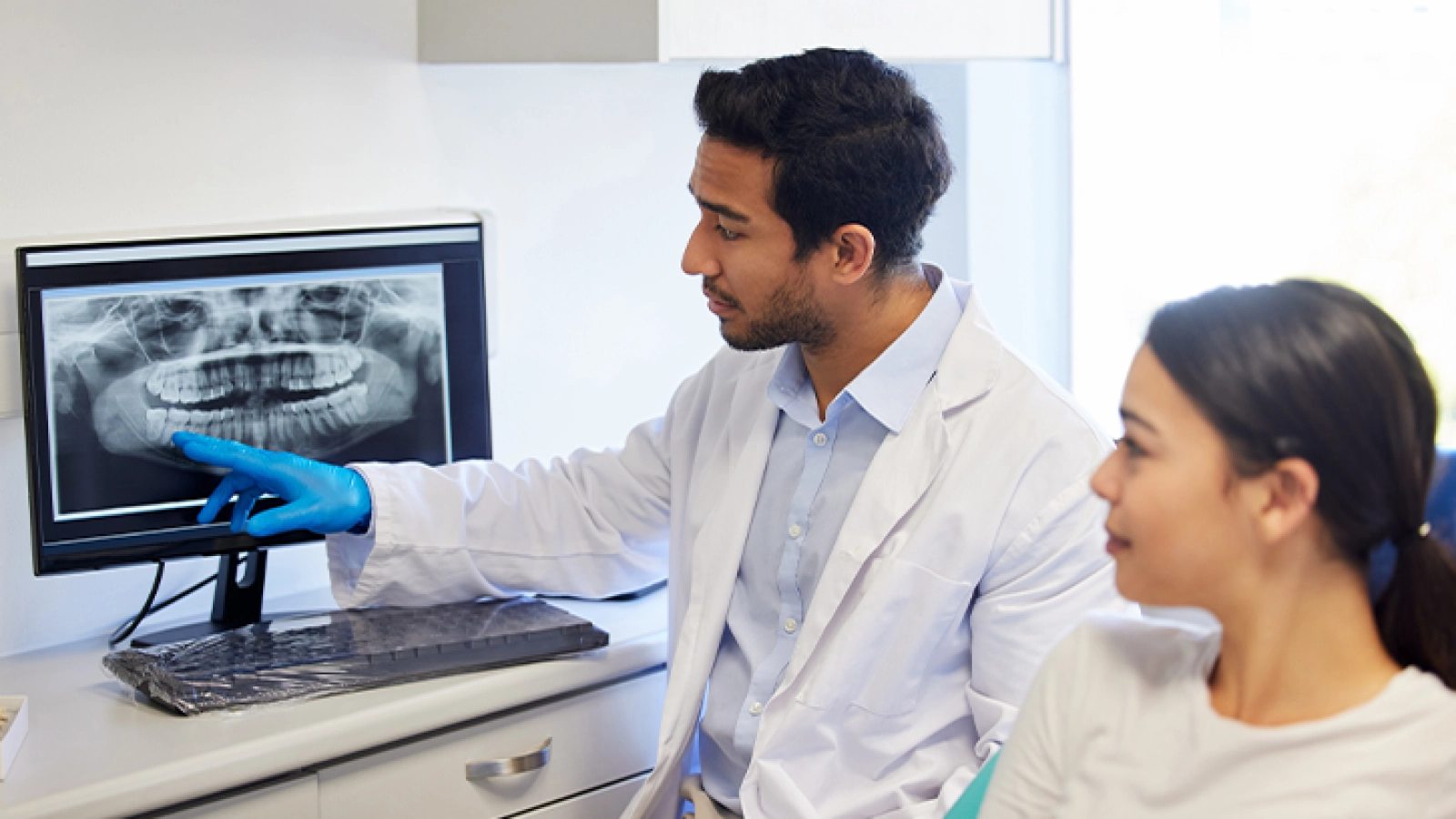
Did you know dental technology’s inception goes way back to prehistoric drills in 7000 BC? Back then, Egyptians used honey and barley mixtures, and the Mayans used decorative stones or shells as early dental implants. In the 18th century, the first dental drill and modern dental technology were established, leading to modern dentistry.
Centuries later, in the late 1980s, 3D dental scanning came into use. This modern diagnostic and digital impression technology creates a detailed, three-dimensional computer model of your teeth, jaws, and surrounding facial structures. It was created to make up for the limitations of traditional dental impressions. These include discomfort, gagging sensations, or difficulty breathing during the process.
Digital dental scanning generates images that help dentists examine oral structure and plan the treatment accordingly. The process is quicker and more comfortable, reducing the inconvenience of traditional impressions.
What Is 3D Dental Scanning?
3D dental scanning, also known as intraoral digital scanning, is a modern method of capturing a highly accurate, three-dimensional digital model of your teeth, gums, and surrounding oral structures using a specialised optical device.
How does 3D scanning works? It works in four ways: the wand, capturing images, real-time rendering, and digital file export. The wand is a small, handheld optical wand used instead of messy trays and putty. When it is gently moved around the mouth, it projects light using confocal microscopy or active wavefront sampling to capture images of the tooth surface. The scanner renders thousands of frames or images per second in real time, and software stitches them into a live 3D model on a chairside screen. Renders are saved as an STL or PLY electronic file and exported digitally to a 3D printer, milling machine, or dental laboratory.
The scanner is used in restorative dentistry, orthodontics, dental implants, prosthodontics, and arch monitoring. Restorative dentistry uses it to design same-day crowns, bridges, inlays, onlays, and veneers. Orthodontics uses it to plan clear aligners, traditional braces, and custom retainers. Dental implants create surgical guides and digital models that merge with 3D X-ray data for placing implants accurately. Prosthodontics uses them to fabricate full or partial dentures and mouthguards. Arch monitoring needs them to track tooth wear, gum recession, or bite changes over time with side-by-side digital comparisons.
3D scanners and traditional impressions differ in material and tool, patient comfort, speed and feedback, accuracy, and storage:
3D Digital Scanning
- Material & Tool – Small, smooth handheld optical wand
- Patient Comfort – Fast, clean, no taste, and far less likely to trigger a gag reflex
- Speed & Feedback – Real-time on-screen 3D generation. Can be re-scanned in seconds.
- Accuracy & Storage – Micron-level precision. Files are stored indefinitely in the cloud or on a computer without warping.
Traditional Impressions
- Material & Tool – Metal/plastic trays filled with alginate or silicone putty
- Patient Comfort – Feels bulky, messy, suffocating, or triggers a strong gag reflex
- Speed & Feedback – Setting time is several minutes. The process should restart if there are tears or bubbles in the mould.
- Accuracy & Storage – Material can shrink, air bubbles can form, and physical distortion or loss in transit can be possible.
How Does 3D Dental Scanning Improve Patient Comfort?
No Messy Impression Materials
The process and results are more comfortable compared to traditional impressions. They generally involve placing a tray filled with thick, putty-like material in the mouth to capture the shape and position of the teeth. This can trigger a gagging sensation or make it difficult to breathe comfortably.
Digital dental scanning uses a handheld digital scanner to capture detailed images of the teeth and gums. This reduces the mess and discomfort felt with traditional impressions.
A More Comfortable Scanning Process
3D dental scanning is done comfortably using a small handheld intraoral scanner. The dentist gently moves it to capture detailed images of your teeth and gums. Since this method does not require patients to hold a mouthful of thick impression material, it is more comfortable than the traditional method. Another pro is a flexible timeline. If you want a short break from the treatment because you feel uncomfortable.
Faster and More Convenient Appointments
The treatment usually includes immediate image capture and real-time assessment, fewer repeat impressions, and saves time. Real-time scan generation and assessment help dentists examine scans and scan specific areas for clearer, more detailed information.
The digital scanner’s scanning and generation accuracy reduces the need for repeated traditional dental impressions. Since the scanner scans and generates images quickly, instantaneously. It makes the treatment convenient for both dentists and patients.
Better Treatment Planning
Digital dental scanning makes treatment planning through detailed examination of teeth, accurate treatment planning, better visualisation, and support for clinical decisions.
The scanner provides clear, detailed images, making it easier for dentists to examine tooth positions, spacing, alignment, and bite relationships more accurately. This also helps them plan different dental procedures, including braces, clear aligners, crowns, and other restorative treatments based on the visuals. The visuals allow dentists to visualise expected changes, providing valuable information for diagnosis and treatment planning. You should note that the scanning visuals do not replace a dentist’s physical examination, clinical evaluation, or professional judgement.
A Better Understanding of Dental Treatment
3D scanners provide a 3D model of your teeth, giving an understanding of existing dental problems. This also helps dentists visualise planned treatments and make informed decisions.
The model gives a clear view of the dental structure, shows patients specific dental concerns, explains what needs attention, demonstrates how a particular treatment can help, and gives patients a clear understanding of the proposed dental procedures.
Which Dental Treatments Use 3D Scanning?
- Clear Aligners and Braces – Captures the current position of the teeth, helping orthodontists assess alignment and plan tooth movements for orthodontic treatment.
- Dental Crowns and Bridges – Provide detailed information about the teeth, helping dentists design customised crowns and bridges with a suitable fit and appearance.
- Dental Implants – Help capture the shape and position of the teeth and surrounding oral structures, supporting accurate implant treatment planning.
- Bite Assessment – Examines how the upper and lower teeth come together, helping identify bite alignment issues.
- Retainers – Create accurate models of the teeth, which are used to design and manufacture customised retainers.
Conclusion
3D dental scanning makes dental appointments more comfortable and efficient by replacing traditional impressions with digital scanning. It provides detailed images of the teeth and oral structures, helping dentists understand each patient’s dental needs and communicate treatment plans more clearly. This modern technology also supports accurate treatment planning while keeping patient comfort in mind.
If you are considering orthodontic treatment, dental crowns, or other dental procedures, discuss digital scanning with your dentist. They can help you understand how 3D scanning works.
If you’re looking for the right dental clinic, here’s one. Dr Bobby’s Dental Clinic, the best dental clinic in Kadavanthra, offers personalised cosmetic dental care through advanced technology and individual treatment plans. Call us at +91 8078961573 or visit our Kadavanthra clinic.